

Carolina Cares Initiative
Practical essentials when basic needs cannot wait.
Carolina Cares is The Poston Foundation’s direct-aid initiative for people facing hardship, instability, homelessness, displacement, or immediate gaps in basic necessities. We assemble and distribute practical Essentials Kits across South Carolina.
A toothbrush, clean socks, water, a snack, basic first aid—small things until you need them and do not have them.
Practical direct aidSouth Carolina-basedDignity-centeredCarefully documented

Why It Matters
Hardship does not begin at the poverty line.
People can be working, housed, and still reach a point where everyday necessities compete with rent, transportation, child care, food, health costs, or an unexpected disruption. Carolina Cares is designed for that immediate layer of need: practical items that can make the next day, appointment, work shift, school day, or transition more manageable.
Sources: United For ALICE (2026 South Carolina report using 2024 data); United Way of the Midlands 2025 Community Assessment; City of Columbia / Midlands Area Consortium for the Homeless 2025 PIT reporting; NIMHD HDPulse / Feeding America Map the Meal Gap.
Carolina Cares focuses on practical essentials that can make an immediate difference in a difficult moment.
Who the program is designed to reach
Carolina Cares is intended to support individuals and families experiencing financial stress, short-term crisis, housing instability, homelessness, displacement, or other immediate resource gaps. Its local roots are in Columbia, with a South Carolina focus and distribution shaped by funding, available supplies, community relationships, and practical operating capacity.
Access to clean socks, basic hygiene items, drinking water, and simple first-aid supplies can affect comfort, dignity, mobility, work readiness, and the ability to keep up with daily responsibilities. These needs can arise together, and the items that are useful in one setting may differ from those needed in another.
That is why the initiative combines a recognizable kit framework with flexibility. Appropriate local outreach and partner-informed distribution help connect available essentials with a real, immediate use.
The Essentials Kit
Every item should serve a purpose.
A Carolina Cares Essentials Kit is a practical support package assembled around useful categories of everyday necessities, with contents selected for the season, distribution setting, and community need.
Hygiene & Personal Care
Soap, toothbrushes, toothpaste, deodorant, wipes, feminine hygiene products, hand sanitizer, and other appropriate personal-care items.
Clothing Basics
Clean socks and other useful clothing basics selected for the season and the setting in which kits will be distributed.
Food & Water
Bottled water, shelf-stable snacks, and similar ready-to-use provisions that can provide practical support during the day.
Health & Safety
Basic first-aid supplies and appropriate protective or seasonal items, selected within the program’s available resources.
Resource Information
Relevant local service information when it is suitable and reasonably current, helping connect practical aid with additional community resources.
Packaging & Other Essentials
Bags and packaging that keep supplies together, plus other useful items selected for the people and circumstances a distribution is intended to support.
Useful supplies, prepared consistently
The program plan calls for standardized or semi-standardized kits using documented supply categories. A clear packing checklist, kit counts, and simple inventory records help volunteers prepare usable packages and help the Foundation understand what has been purchased, donated, assembled, and distributed.
In-kind support can help stretch the supply budget. Before purchasing a large quantity or organizing a collection drive, contact the Foundation to discuss current priorities, product suitability, quantities, and delivery arrangements.
Carolina Cares Initiative video
How It Works
Simple by design. Careful in execution.
The operating plan follows six connected stages. Support must cover the practical work between receiving a gift and getting an appropriate kit into someone’s hands, as well as the records needed to explain what happened afterward.
Receive Support
Grants, charitable gifts, sponsorships, and approved in-kind supplies build capacity. Gifts are tracked with their source, amount, date, any accepted restriction, and acknowledgment status.
Procure Supplies
Needed products are purchased or received according to community need, season, price, and availability. Receipts, invoices, and vendor records support responsible spending.
Assemble Kits
Volunteers and program partners may organize approved products, use a packing checklist, and record assembled kit quantities. Supply and inventory records are maintained where practical.
Distribute Aid
Kits may be provided directly through local outreach or through appropriate community touchpoints and partner-supported channels. Dates, locations or partners, and kit counts are logged.
Document Activity
Funds, purchases, donated supplies, preparation, and distributions are recorded in a way that supports accountability without unnecessary identification of recipients.
Report Results
Budget-to-actual review and concise narrative and financial summaries help leadership, donors, sponsors, and funders assess completed activity and the next funding need.
Distribution built around available capacity
The Foundation is developing a repeatable, volunteer-supported model. A useful distribution requires appropriate supplies, preparation time, transportation, a suitable location or community relationship, and enough capacity to document the work. Funding and donated products help make those elements available together.
Businesses, churches, civic organizations, and community groups can help by discussing supply needs, volunteer packing, referrals, or distribution opportunities. Contact Carolina Cares about a partnership so the scope and timing can be coordinated.
2026 Launch Funding
A defined first step: a $5,000 launch plan.
The 2026 launch goal is $5,000 for Essentials Kit supplies, preparation, local distribution, and program records, with an estimated scope of approximately 200 kits.
| Use of support | Planned amount |
|---|---|
| Hygiene items | $1,500 |
| Socks | $800 |
| Snacks & water | $600 |
| First-aid basics | $400 |
| Bags & packaging | $300 |
| Distribution, tracking & administration | $1,400 |
| Total launch plan | $5,000 |
What a successful launch should document
The launch brief identifies four practical measures: funds raised are tracked, supplies purchased are supported by receipts, kits assembled are counted, and kits distributed are logged. A post-distribution update can then describe completed work with a clear connection between the support received and the activity delivered.
The Twelve-Month Program Plan
Building a dependable program beyond the launch.
The broader program framework is a $30,000 twelve-month plan with a target of approximately 1,000 Essentials Kits. It sets aside $25,000 for kit supplies, $3,000 for distribution and other direct costs, and $2,000 for limited administration and indirect support.
| Budget category & purpose | Planned amount |
|---|---|
| Essentials Kit supplies Hygiene and personal-care products, clothing basics, first aid, food, water, seasonal items, resource materials, and related contents. | $25,000 |
| Distribution & other direct costs Packing materials, local transportation, printing, storage, distribution support, and other direct project needs. | $3,000 |
| Administrative & indirect support Donation tracking, recordkeeping, reporting, communications, compliance support, and limited program administration. | $2,000 |
| Total twelve-month plan | $30,000 |
Budget figures are drawn from the 2026 launch funding brief and Stewardship, Capacity & Program Plan.
Stewardship & Accountability
Success will be recorded, not merely described.
The Foundation is building Carolina Cares around conservative public claims, documented spending, clear use-of-funds records, and concise reporting. The purpose is to protect donor confidence while treating people receiving assistance with dignity.
Gift records
Track support by source, amount, date, restriction, and acknowledgment status so fundraising records can be connected to program activity.
Purchase records
Retain receipts, invoices, vendor information, and budget categories to explain how funds were used and compare spending with the plan.
Preparation records
Count assembled kits and maintain practical supply or inventory records. Document appropriate in-kind support and the supplies it adds to the program.
Distribution records
Log the date, location or partner, and kit count. Document the activity without gathering unnecessary personal information about recipients.
Reporting that separates plans from results
A useful program update should describe what was funded, what was purchased or contributed, how many kits were prepared and distributed, and how actual costs compared with the budget. The Foundation’s plan calls for concise narrative and financial summaries for supporters and funders.
Program updates track kits prepared and distributed, supply categories, spending, volunteer and partner activity, and other records that show what the program accomplished.
A small organization with defined responsibilities
The Poston Foundation is a South Carolina 501(c)(3) public charity founded in 2020 and headquartered in Columbia. Its program overview identifies a three-member Board of Directors, adopted governance policies and internal controls, and a lean implementation model supported by volunteers.
Eric Chalmers Poston, Founder & Executive Director, is the primary contact for program, funding, and partnership discussions. Learn more about leadership and governance, review the transparency resources, or read the donation policy.
Why We Are Fundraising Now
The next distribution starts before the day we hand out a single kit.
A reliable supply fund allows The Poston Foundation to purchase products when prices are favorable, take advantage of bulk purchasing opportunities, replenish inventory, coordinate packing activities, and prepare for distributions without beginning from zero every time an opportunity to help emerges.
The objective is a credible, repeatable community-support program capable of serving South Carolinians year after year.
Ways to Participate
Several ways to help make the next distribution possible.
Give once or monthly
A one-time gift helps prepare the next distribution. Recurring support can build a more dependable supply base, helping the program replenish inventory and plan the next opportunity to serve.
Sponsor Essentials Kits
Businesses and community supporters can contribute at defined levels, with appropriate charitable-supporter recognition and a post-distribution update.
Contribute supplies
Approved in-kind products can extend the supply budget. Discuss current needs before committing to a large purchase or drive so donated items fit the planned kits and available storage.
Volunteer time
Express interest in supply organization, kit preparation, packing activities, or other coordinated support. Opportunities depend on current program needs and capacity.
Connect a community partner
Churches, civic organizations, local businesses, and community groups can discuss referral connections, suitable distribution settings, and practical support for planned activities.
Consider a grant or matching gift
Program grants, workplace giving, and matching gifts can strengthen the supply and operating base. The funding and stewardship documents provide a starting point for review.

Turn support into a prepared distribution.
Fundraising provides the supplies and operating capacity; coordinated volunteers can help inventory, pack, and prepare approved items when a defined assignment is ready.
Join the volunteer interest list →Business & Community Support
Carolina Cares Essentials Kit Sponsorship
Sponsorship supports supplies, kit preparation, distribution, and program operations. Five levels give local businesses and community supporters a clear way to participate.
| Level & recognition | Support |
|---|---|
| Community Sponsor Website name acknowledgment with consent; e-newsletter acknowledgment if issued; a post-distribution impact update. | $250 |
| Supporting Sponsor Community recognition, plus name acknowledgment on select materials when used, a digital supporter badge on request, and event acknowledgment when applicable. | $500 |
| Impact Sponsor Supporting recognition, plus website logo acknowledgment with consent and a social-media thank-you when appropriate. | $1,000 |
| Lead Sponsor Impact recognition, plus logo acknowledgment on event signage when used and featured charitable-supporter recognition when applicable. | $2,500 |
| Presenting Sponsor Lead recognition, plus prominent charitable-supporter recognition and a public thank-you at an event when applicable. | $5,000 |
Building on the Original Effort
Carolina Cares began with people going into the community and helping.
The renewed initiative is strengthening fundraising systems, sponsorship opportunities, internal controls, volunteer coordination, digital infrastructure, grant readiness, community partnerships, and repeatable procedures for assembling and distributing Essentials Kits.
Carolina Cares: 2020 → Today
The work came first. The structure followed.
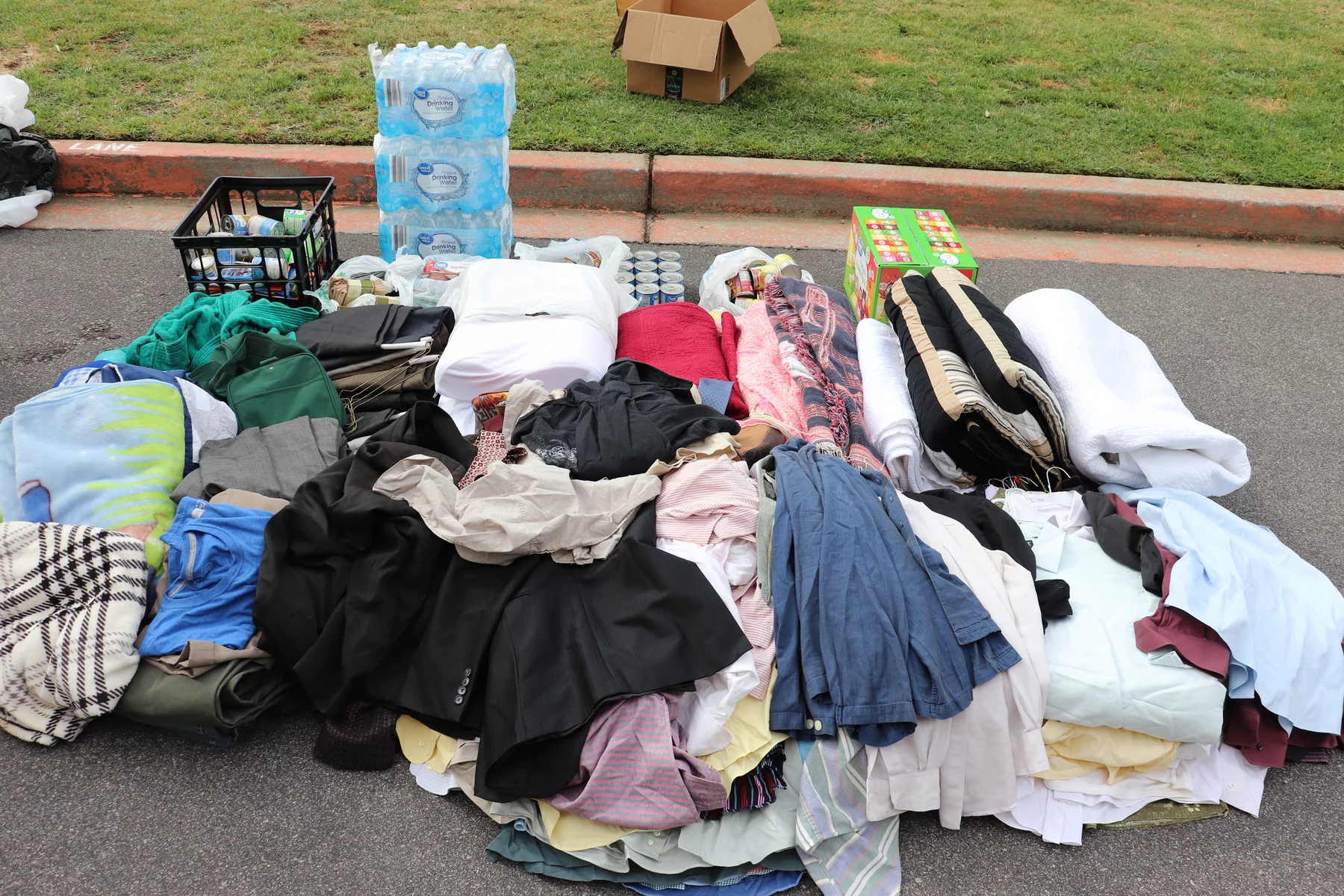
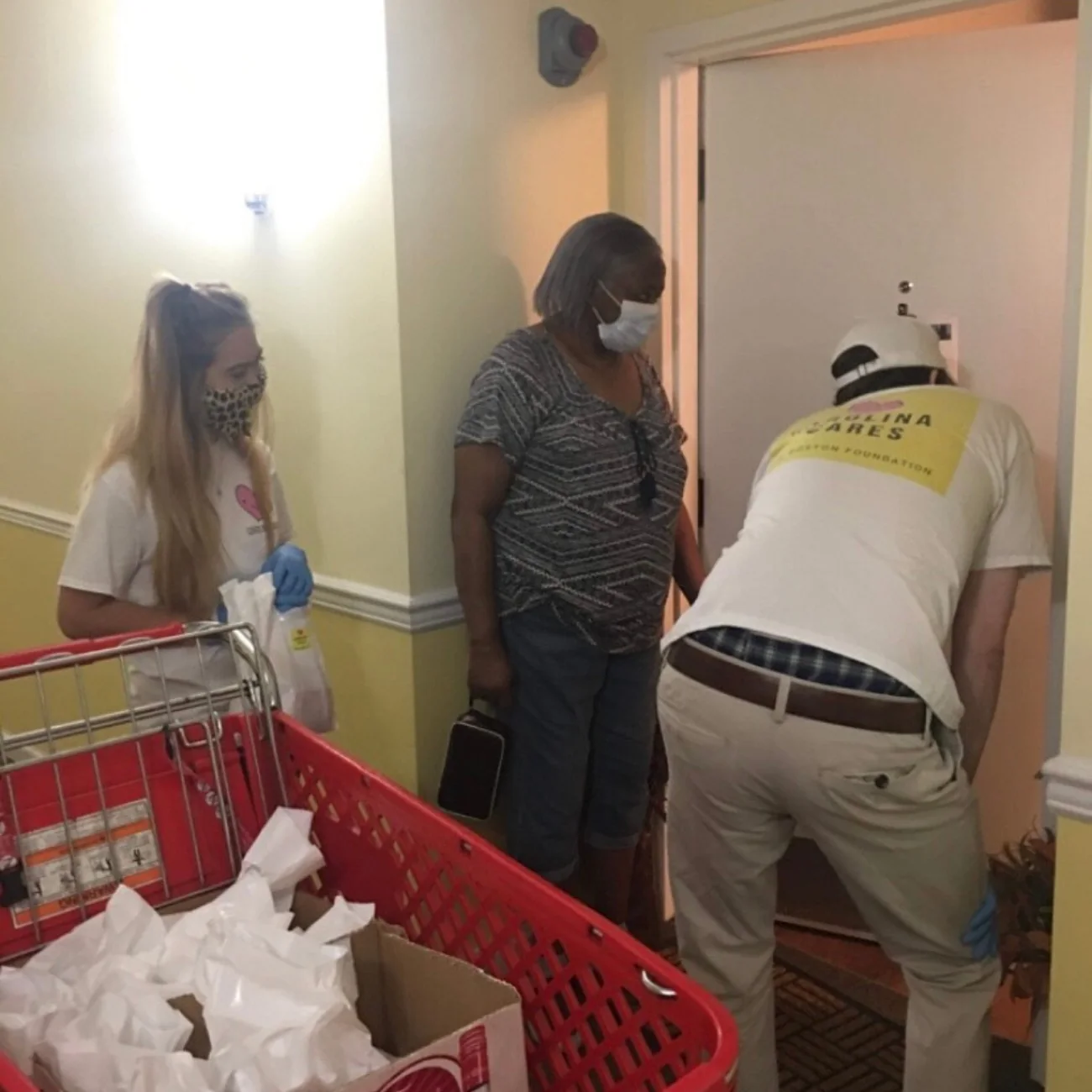
Carolina Cares began during the first months of COVID-19 in Columbia. Volunteers went into the community with food, water, hygiene items, sleeping bags, blankets, clothing, and other basic supplies. The work was immediate and hands-on.
The current initiative carries that practical approach forward with stronger purchasing controls, privacy standards, volunteer coordination, defined budgets, and public reporting.
Read, Share & Review
The funding and stewardship documents.
Review the full source materials behind the launch goal, sponsorship levels, twelve-month plan, and accountability commitments. The summaries above make the key information accessible on this page; these PDFs provide the original materials for grant, sponsor, and partner review.
Carolina Cares Essentials Kits: Complete Funding Package
Four pages covering the 2026 launch funding brief, business and community sponsorships, organizational overview, and stewardship plan.
Open the complete funding package (PDF) · Download
Preview the four-page funding package
If the document preview is unavailable, open the PDF directly.
Program Overview & Stewardship Plan
Two pages detailing organizational capacity, the six-stage operating cycle, proposed budget, planning assumptions, recordkeeping, and ways to participate.
Open the program and stewardship overview (PDF) · Download
Preview the two-page stewardship overview
If the document preview is unavailable, open the PDF directly.
For a funding discussion, current distribution information, or an in-kind proposal, contact carolinacares@thepostonfoundation.org or 803-365-3054.
Clear Answers
What donors and partners should know.
What does a Carolina Cares donation support?
Campaign funds support Essentials Kit supplies, preparation, distribution, documentation, outreach, packaging, transportation, program logistics, and other reasonable direct or administrative costs necessary to operate the initiative effectively.
What can be included in an Essentials Kit?
Kits can include hygiene items, clean socks, first-aid basics, shelf-stable snacks, water, seasonal supplies, and local resource information, selected for the distribution setting and community need.
Can businesses participate?
Yes. Businesses may support the initiative through sponsorships, matching gifts, community grants, product donations, employee volunteer teams, gift cards, printing, logistics, or other suitable in-kind assistance.
How will distributions be documented while respecting recipients?
The stewardship plan calls for logging the date, location or partner, and number of kits distributed without unnecessary recipient identification. Kit and supply records, purchase documentation, and concise financial and narrative reporting support accountability.
How can I discuss a distribution, referral, or supply donation?
Contact the Foundation at carolinacares@thepostonfoundation.org or 803-365-3054.
Program Updates
Recent Carolina Cares updates.
Carolina Cares Essentials Kits: Practical Support, Prepared with Purpose
A look at the current Carolina Cares Essentials Kit model, what kits can include, and how The Poston Foundation plans for preparation, distribution, and accountability.
Read update
Carolina Cares: The 2020 Direct-Aid Record
The documented 2020 outreach that established the direct-service roots of today’s Carolina Cares Initiative.
Read updateCarolina Cares Sponsorship: A Practical Way for Local Organizations to Help
A five-level sponsorship framework gives businesses, churches, civic groups, and community organizations a defined way to support Carolina Cares Essentials Kits.
Read updateEvery Essentials Kit begins the same way: someone decides to help.
Donate, sponsor the initiative, contribute supplies, volunteer, or connect Carolina Cares with a community partner.